GUTS
An exploration of survival, ambition, betrayal, human connection, and the difficult journey toward healing.
Berserk / Kentaro Miura / Seinen
Beyond the Black Swordsman
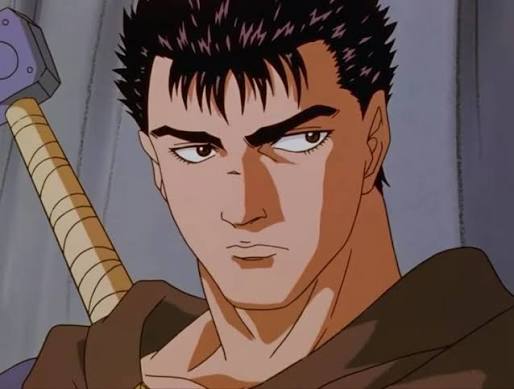
Guts is the central protagonist of Kentaro Miura’s Berserk, a warrior whose life is shaped by hardship, companionship, betrayal, and an extraordinary determination to continue moving forward.
Recognizable for his enormous sword, dark armor, and intimidating appearance, Guts has become one of the most iconic characters in dark fantasy manga. However, his physical strength is only one aspect of what makes him such a compelling protagonist.
His story examines the consequences of trauma, the importance of human connection, and the struggle to discover a purpose beyond simply surviving another day.

Character Color Palette
Inspired by the dramatic black, crimson, orange, and bronze tones of the 1997 Berserk anime artwork, this palette reflects the atmosphere surrounding Guts and his character journey.
A Life Defined by Struggle

Childhood and Early Life
Guts is born beneath the body of his deceased mother and discovered by a traveling mercenary group. He is taken in by Shisu, who cares for him until she dies of illness when he is approximately three years old.
He is subsequently raised by Gambino, a mercenary who teaches him swordsmanship. Rather than experiencing a traditional childhood, Guts grows up surrounded by violence and instability.
Beginning his sword training at a young age, Guts participates in battles while still a child. His relationship with Gambino becomes increasingly abusive, eventually forcing him to flee the mercenary group after defending himself.
These early experiences establish many of the emotional difficulties that follow Guts throughout his life. He learns to distrust others, depend on his own strength, and associate vulnerability with danger.

The Band of the Hawk
At approximately fifteen years old, Guts encounters Griffith and is defeated in a duel. As a result, he joins the Band of the Hawk, a mercenary company led by Griffith.
His exceptional combat abilities allow him to become captain of the raiders, earning the respect of his fellow soldiers and establishing himself as one of the group’s strongest warriors.
More importantly, his time with the Hawks introduces him to friendship, loyalty, and a sense of belonging. For someone who has spent most of his life surviving alone, these relationships represent an entirely different way of living.
The Hundred Man Slayer
One of the most memorable demonstrations of Guts’s determination occurs when he protects Casca and confronts approximately one hundred enemy soldiers. The encounter earns him the reputation of the Hundred Man Slayer and illustrates both his extraordinary endurance and willingness to protect others.
Finding His Own Dream
Despite his accomplishments, Guts begins questioning whether his life has a purpose beyond helping Griffith achieve his ambitions. After hearing Griffith’s perspective on friendship and personal dreams, he decides to pursue a path of his own.
His departure represents a significant moment of independence. Rather than continuing to define himself through another person’s aspirations, Guts attempts to discover what he wants from his own life.
Behind the Armor
Physical Appearance
Guts is a tall, muscular warrior with short black hair, numerous scars, and a physically imposing appearance. His design changes throughout the series, reflecting the consequences of his experiences.
His dark armor, enormous Dragon Slayer, prosthetic left forearm, missing right eye, and eventual white streak of hair become recognizable elements of his later appearance.
Personality and Temperament
Guts is independent, stubborn, determined, and emotionally guarded. His childhood experiences make him reluctant to trust others, particularly when doing so requires him to acknowledge his own vulnerability.
Although he frequently appears intimidating or distant, he possesses a strong capacity for loyalty, affection, and compassion. These qualities become particularly visible through his relationships with Casca and his later companions.
Strengths and Flaws
His greatest personal challenges are not necessarily the enemies he encounters. They are the emotional patterns that prevent him from accepting support, recognizing his limitations, and allowing himself to depend on other people.
The People Who Shape Him
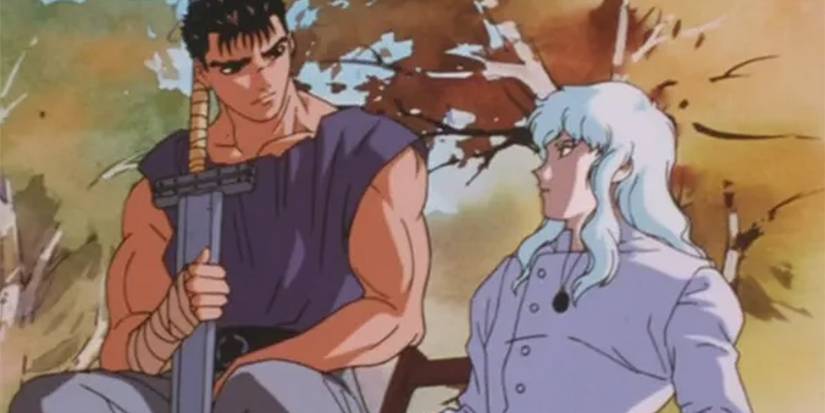
Griffith
Griffith is one of the most influential individuals in Guts’s life. Their relationship develops from rivalry into a complicated bond involving admiration, loyalty, friendship, and dependence.
Guts respects Griffith’s ambition but eventually recognizes that he cannot continue defining his identity through another person’s dream.
Their conflicting desires become central to the narrative. While Guts seeks personal independence, Griffith struggles with the loss of someone who has become exceptionally important to him.

Casca
Initially characterized by rivalry and misunderstanding, the relationship between Guts and Casca gradually develops into mutual respect, trust, and romantic affection.
Their relationship allows both characters to express vulnerabilities they have previously struggled to acknowledge. Guts begins discovering that intimacy does not necessarily mean weakness.
Casca remains one of the most important individuals in his journey. His relationship with her eventually challenges the priorities that once defined his existence and encourages him to reconsider what truly matters to him.
The Band of the Hawk
His friendships with Judeau, Pippin, Rickert, Corkus, and the other members of the Hawks provide Guts with a sense of community. Their presence demonstrates that his value extends beyond his effectiveness as a fighter.
Puck
Puck provides companionship during one of the darkest periods of Guts’s life. His humor, empathy, and willingness to challenge Guts’s behavior offer an important contrast to the Black Swordsman’s increasingly isolated existence.
Later Companions
Throughout his later journey, Guts develops relationships with Farnese, Serpico, Isidro, and Schierke. Although initially reluctant to accept their assistance, he gradually begins relying on their individual abilities and emotional support.
Schierke becomes particularly important in helping Guts maintain control while using the Berserker Armor. These relationships represent his willingness to form new connections despite the painful experiences associated with his past.
The Evolution of the Struggler
Guts’s development is not a straightforward progression from weakness to strength. Instead, his journey repeatedly examines the relationship between survival, independence, anger, and companionship.
Survival Before Belonging
Raised among mercenaries, Guts learns to depend on his sword and personal strength. Emotional security is largely absent from his childhood.
Discovering Companionship
The Band of the Hawk introduces Guts to friendship, loyalty, and a sense of belonging that he has rarely experienced before.
Searching for His Own Purpose
Guts leaves the Hawks to pursue an identity independent of Griffith’s ambitions and expectations.
Major Spoilers — The Eclipse, Black Swordsman, and Later Character Development
The Eclipse and the Black Swordsman
After returning to assist the Band of the Hawk and rescue Griffith, Guts experiences the most devastating turning point of his life.
During the Eclipse, Griffith sacrifices the Band of the Hawk to become Femto, a member of the God Hand. Guts loses his left forearm and right eye while witnessing the destruction of the community he had come to consider his family.
Guts and Casca survive with the assistance of the Skull Knight, but both are left deeply traumatized. The Brand of Sacrifice also leaves them vulnerable to supernatural threats.
Consumed by grief, anger, and betrayal, Guts begins hunting apostles. Armed with the Dragon Slayer and a prosthetic arm, he becomes known as the Black Swordsman.
Revenge provides him with a sense of direction, but his determination also threatens to destroy the compassion and humanity he has worked so hard to develop.
The Beast of Darkness
The Beast of Darkness represents the destructive impulses and accumulated resentment within Guts. It embodies the temptation to surrender completely to anger and vengeance.
His struggle against these impulses demonstrates that some of his most significant conflicts are internal rather than physical.
The Berserker Armor
The Berserker Armor allows Guts to surpass his body’s natural limitations, granting extraordinary combat capabilities while placing his physical and psychological well-being at considerable risk.
Rather than functioning as a simple increase in power, the armor symbolizes the dangers of determination without self-preservation.
Learning to Trust Again
As his journey continues, Guts gradually shifts his priorities toward protecting Casca and accepting assistance from his companions.
His willingness to rely on other people becomes one of the most meaningful aspects of his development. Although his past continues to influence him, it no longer has to determine every aspect of his future.
Weapons of the Black Swordsman
Despite confronting supernatural opponents, Guts remains fundamentally human. His effectiveness comes from exceptional swordsmanship, experience, adaptability, endurance, and specialized equipment.
| Equipment | Description |
|---|---|
| Dragon Slayer | An enormous sword capable of confronting powerful supernatural opponents. |
| Prosthetic Arm | An artificial left forearm equipped with a concealed cannon. |
| Repeating Crossbow | A ranged weapon used alongside his prosthetic arm. |
| Throwing Knives | Secondary weapons that complement his close-range combat abilities. |
| Explosives | Additional equipment used during difficult encounters. |
| Berserker Armor | Supernatural armor that enhances combat capabilities at considerable personal risk. |
His equipment frequently reflects his willingness to endure extreme physical consequences in order to continue fighting. This becomes increasingly important as the narrative questions the cost of his determination.
Strength, Humanity, and Healing
Survival and Identity
One of the most compelling aspects of Guts’s character is the way survival influences his identity. From childhood, he learns that his ability to fight is essential to his continued existence.
However, Berserk gradually challenges the idea that survival alone is enough to provide someone with a meaningful life. Guts’s experiences with the Band of the Hawk introduce him to relationships and ambitions that extend beyond combat.
Independence and Human Connection
His decision to pursue his own dream represents an important assertion of personal identity. Nevertheless, his later development also demonstrates that independence does not require complete emotional isolation.
His companions challenge the belief that accepting help diminishes his strength. Instead, their presence allows him to confront circumstances that would be impossible to manage entirely alone.
Trauma and Emotional Growth
Berserk does not present healing as an immediate or effortless transformation. Guts continues struggling with anger, distrust, and painful memories even as he develops meaningful relationships.
His progress is often inconsistent. There are moments of compassion and vulnerability alongside moments of emotional withdrawal and destructive behavior.
This complexity makes his character development particularly compelling. His growth is not defined by becoming flawless, but by gradually recognizing that he deserves a life beyond constant suffering and conflict.
Fate and Free Will
The concept of causality is central to Berserk. Guts repeatedly confronts circumstances that appear predetermined, yet continues attempting to influence the direction of his own life.
His refusal to surrender his agency makes him an important representation of the conflict between fate and personal choice. Even when he cannot control the circumstances surrounding him, he continues searching for a way forward.
Central Character Themes
About Berserk
Berserk is a Japanese dark fantasy manga created by Kentaro Miura. Set within a medieval-inspired fantasy world, the series explores ambition, morality, fate, human connection, and the struggle against seemingly predetermined circumstances.
Following Miura’s passing in 2021, the manga continued with artwork by Studio Gaga under the supervision of his longtime friend and fellow manga creator Kouji Mori.
Manga Publication Information
Anime Adaptations
| Adaptation | Release | Format |
|---|---|---|
| Berserk | 1997–1998 | 25 episodes |
| Berserk: The Golden Age Arc | 2012–2013 | Film trilogy |
| Berserk | 2016–2017 | 24 episodes |
| The Golden Age Arc: Memorial Edition | 2022 | 13 episodes |
Berserk (1997)
The 1997 anime adaptation focuses primarily on the Golden Age Arc, exploring Guts’s experiences with the Band of the Hawk, his relationship with Griffith, and his developing connection with Casca.
Its atmospheric direction, distinctive soundtrack, and emphasis on character relationships remain defining aspects of the adaptation.
Guts — Voice Actors
| Adaptation | Japanese | English |
|---|---|---|
| 1997 Anime | Nobutoshi Canna | Marc Diraison |
| Golden Age Films | Hiroaki Iwanaga | Marc Diraison |
| 2016 Anime | Hiroaki Iwanaga | Kaiji Tang |
Additional Cast — 1997 Anime
| Character | Japanese | English |
|---|---|---|
| Griffith | Toshiyuki Morikawa | Kevin T. Collins |
| Casca | Yūko Miyamura | Carrie Keranen |
| Judeau | Akira Ishida | Christopher Kromer |
Guts Figures & Collectibles
For collectors interested in adding Berserk merchandise to their collections, Good Smile Company offers several officially licensed interpretations of Guts, ranging from detailed Berserker Armor figures to a stylized Nendoroid release.

POP UP PARADE Guts: Berserker Armor (Bloody Paint Ver.) L Size
View Official Product

Pricing, preorder periods, and product availability may change. Product photography belongs to Good Smile Company and the respective copyright holders.
Why Guts Remains Unforgettable
What makes Guts such a memorable character to me is that his development feels incredibly human despite the supernatural circumstances surrounding his story.
He is exceptionally strong, but he is also flawed, emotionally guarded, and frequently overwhelmed by experiences beyond his control. His determination does not erase his vulnerabilities, and his personal growth does not happen without setbacks.
I particularly appreciate how Berserk explores the importance of companionship without suggesting that relationships automatically resolve someone’s trauma. Guts continues struggling with his past while gradually learning that he does not have to carry every burden alone.
His physical strength is undoubtedly impressive, but his capacity to form meaningful relationships, experience compassion, and continue searching for a better future is what makes him one of the most compelling protagonists in manga.
୨୧ BLUSH & PIXELS ୨୧
A Little Note From Layla
The person behind the reviews, recommendations, and everything Blush & Pixels.
A One-Woman Show
Hi, I’m Layla! I’m the founder, writer, and editor behind Blush & Pixels. This little corner of the internet is a one-woman show, from writing reviews and putting together recommendations to managing the website itself.
I do my best to make every review unique, honest, informative, and fun to read. Whether I’m talking about anime, manga, manhwa, manhua, danmei, books, or otome games, I want to share my genuine thoughts while helping you decide if something might be worth checking out.
I also try to include useful information, like where you can officially read, watch, or purchase the titles I feature. When possible, I’ll link directly to the main publisher, distributor, or official platform so you have somewhere to start.
A Note for International Readers
One thing I want to mention is that availability can vary depending on where you live. A manga, manhwa, anime, or book that’s available in one country might not be accessible in another. The same goes for streaming services, publishers, digital reading platforms, and physical releases.
To my international readers, I’m sorry if you ever have trouble finding something I’ve recommended! I know how frustrating it can be when a title catches your attention but isn’t available in your region.
I try my best to include official publisher websites and reading or viewing platforms whenever I can. While I can’t guarantee that every link will work worldwide, I hope the information I provide makes finding your next read or watch a little easier.
Honest Reviews, Always
Every review on Blush & Pixels reflects my own experience and opinions. Not every story will be a favorite, and that’s okay! I believe it’s possible to enjoy something while still recognizing its flaws.
My goal is to keep my reviews fair, thoughtful, and respectful toward the people who create these stories. Any criticism is directed at the work itself, never as a personal attack on creators, staff, or readers who might disagree.
Whether a title was purchased by me, borrowed, gifted, or provided as an advance review copy, my opinions remain my own. I also aim to clearly disclose when a review involves gifted copies or collaborations.
Credits & Copyright
All third-party artwork, book covers, screenshots, logos, character art, and promotional materials belong to their respective copyright holders. Blush & Pixels does not claim ownership of these materials.
Images and other visual materials may appear in the context of reviews, commentary, criticism, and informational coverage. Their inclusion does not imply ownership, endorsement, or affiliation unless otherwise stated.
My original written reviews, commentary, and website content are part of Blush & Pixels. Please do not copy or repost my original work without permission. If you’d like to reference a review, proper credit and a link back are always appreciated.
If you’re a copyright holder with a concern about material appearing on this website, please contact Blush & Pixels so the matter can be reviewed.
BLUSH & PIXELS
Thanks for Reading!
Enjoyed this review or recommendation? There’s always another story waiting to be discovered. Explore more manga, manhwa, manhua, danmei, BL, GL, romance, fantasy, anime, and otome recommendations on Blush & Pixels.
Explore Blush & PixelsBlush & Pixels

Pink Moon Lay




Follow along for more anime, manga, manhwa, otome games, reviews, recommendations, and little discoveries along the way.