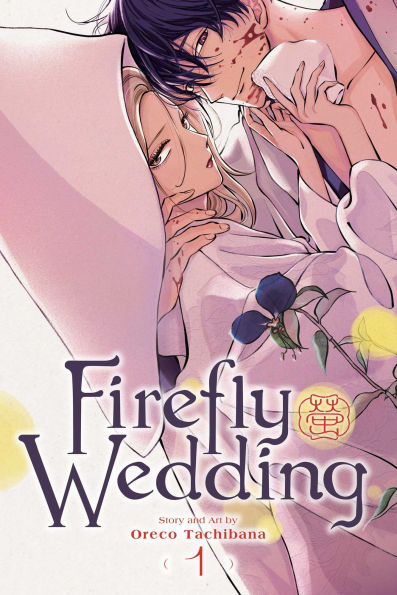
Firefly Wedding
A lush historical romance wrapped in danger, obsession, and class tension, with a premise that starts strong and later gets messier the more it tries to soften what made it compelling in the first place.
Overview
Firefly Wedding is a historical romance manga by Oreco Tachibana. The story follows Satoko Kirigaya, a noblewoman with a fragile heart condition, whose life collides with the dangerous assassin Shinpei Goto. What begins as a desperate arrangement becomes a romance full of obsession, imbalance, survival, and emotional intensity.
Why This Series Blew Up
When Firefly Wedding was announced in English, it immediately grabbed attention from readers craving darker, more intense romance. It fits right into the kind of “toxic shoujo” energy that so many readers love: obsession, imbalance, danger, and emotional messiness instead of a safe or tidy love story.
At a time when fans still talk about the shoujo and josei drought, this series stood out fast. Between the historical setting, the suspense, and the unstable romantic dynamic, it had exactly the kind of edge that makes people lock in.
My Review
What I Loved
- The art is stunning and instantly recognizable.
- The pinks, purples, and soft beauty of the series contrast so well with the violence underneath.
- Shinpei’s early characterization is gripping because he truly feels dangerous and obsessive.
- The class divide adds tension beyond the romance itself.
- The series starts with a hook that feels dramatic, emotional, and hard to stop reading.
What Didn’t Fully Work
- The story gradually feels less committed to its own dark romance premise.
- Shinpei loses some of the edge that made him compelling.
- Satoko’s choices later in the story weakened the emotional payoff for me.
- The romance starts to feel less tragic and more inconsistent.
- The ending left me wanting more emotional urgency from Satoko.
My Thoughts
What grabbed me about Firefly Wedding at first was how fully it leaned into the contrast between elegance and danger. It looks soft and beautiful, but the romance underneath is unstable, obsessive, and emotionally loaded. Shinpei especially gives the story its strongest spark. He is not meant to feel safe, and that is exactly why the tension works.
The series is strongest when it embraces that imbalance instead of trying to smooth it over. The class difference between Satoko and Shinpei adds a lot too, because their relationship was never going to be simple or socially clean. That messy foundation is part of what made the manga so interesting to me in the first place.
One thing I really appreciated early on is that Satoko is not a shrinking violet. Even though she is physically fragile and raised in luxury, she is sharp, cunning, and resourceful. She understands the danger she is in and thinks fast, which makes her more compelling than a heroine who simply gets dragged from scene to scene.
A lot of the story’s tension also comes from what marriage means in this time period. For Satoko, marriage is tied to family duty, safety, and the kind of future she is expected to secure. That social pressure gives extra weight to her decisions and helps explain why the romance feels tangled up with obligation as much as desire.
I also like that the series uses that background to show how limited women’s agency could be. Satoko is trying to make choices for herself, but she is doing it inside a system that keeps narrowing those choices down, which adds to the emotional mess of everything.
Where the Story Started to Lose Me
One of my biggest frustrations is that the story eventually felt less committed to what made its premise work. Once Mitsuharu was introduced, it started to feel like the narrative was shifting toward a more “acceptable” rival, almost as if Shinpei needed to be contrasted against someone more respectable so the story could morally judge him more openly.
That would already be a little frustrating in a romance built around a ruthless assassin, but what made it worse was the way Shinpei seemed to lose some of his original edge. He began to feel softened in a way that did not always feel earned. Part of what made him interesting was that he was obsessive, dangerous, and emotionally extreme. When the story pulls back from that too much, it weakens the core appeal.
Satoko also became harder for me to fully support later on. The story often frames her as the more moral one, but some of her choices did not feel especially fair to Shinpei. The Mitsuharu marriage situation is where things really got messy for me. Shinpei may not be a good man, but he was loyal in his own intense way, and the emotional weight of what Satoko chose there never felt fully addressed the way it should have been.
I think that is why some of the later romance stopped landing for me. Instead of feeling tragic in a satisfying way, it started to feel like the story wanted both the dangerous allure of Shinpei and the safety of a more socially acceptable path, without fully reconciling the two. Satoko wanting both dreams at once could have been compelling, but the execution made the emotional fallout feel thinner than it should have.
The ending also disappointed me. I was genuinely surprised that Satoko did not do more to actively search for Shinpei. Given her status, resources, and connections, I expected more than longing from a distance. If their positions had been reversed, Shinpei absolutely would have searched relentlessly. That difference made the ending feel less emotionally satisfying than I wanted it to be.
In the end, the class divide remains one of the most interesting things about Firefly Wedding, but it also becomes one of the reasons the romance feels so difficult to resolve cleanly. Dating across worlds was always going to be messy. I just wish the story had trusted that mess more instead of trying to soften it.
Some Snaps ✦
Just a few visuals that capture the soft yet dangerous vibe of Firefly Wedding.

Symbolism ✦ Fireflies
The title Firefly Wedding feels especially fitting once you sit with it. Fireflies are often associated with passionate love, fleeting beauty, and something bright that cannot last forever.
That symbolism fits Satoko and Shinpei almost too well. Their connection is intense, emotional, and magnetic, but it never feels fully stable. There is always the sense that what they have could burn brightly and then disappear just as quickly.
That gives the romance an extra layer of melancholy. It does not just feel dangerous. It feels temporary, which makes the longing hit even harder.
Final Verdict
Firefly Wedding is still a visually gorgeous and emotionally compelling read, especially if you love dark romance, obsessive male leads, and stories where beauty and danger are tangled together. But for me, the later writing choices stopped it from being as strong as its premise promised.
Even so, it is memorable, dramatic, and absolutely one of those manga that gives you a lot to talk about after you finish reading.
Back to TopAll images, character art, screenshots, logos, and promotional materials featured in this review belong to their respective owners. I do not claim ownership of any third-party visuals used.
Content is shared for commentary, review, and informational purposes only. No copyright infringement is intended. If you are a rights holder and would like something removed, please contact me and I will take it down.
All reviews on Blush & Pixels are written by the Blush & Pixels Founder and Editor. Each review reflects my personal experience with the title and is created with time, care, and thoughtful consideration.
My goal is to be honest and fair while keeping things respectful. Any criticism is directed at the work itself and is never meant to be rude, hateful, or personal toward creators, staff, or fans.
Please do not repost my written review text without permission. If you would like to reference something, linking back is always appreciated.
🎲 What is Roulette Review?
Reading three volumes of manga, manhwa, and manhua all at once 📚💨
Watching a J-drama or K-drama at 2x speed because I have to know if they kiss 😭
Switching between my Switch, phone, and Steam library because I can’t pick one game 🎮
Balancing a controller, my phone, a matcha latte, and five tabs of otome game guides… all while pretending I have it together ✨
Roulette Reviews are chaotic, emotional, and always from the heart ❤️
Stay tuned for more roulette reviews—anything can pop up next!
🎀 Thanks for reading! 🎀
Did you enjoy this review? There’s more cozy otome content, character spotlights, and dreamy romance waiting for you 💕
🌸 Go Back Home 🌸🌸 Blush & Pixels 🌸

🎀 Pink Moon Lay 🎀




✨ Follow for otome, manhwa, manga, anime & cozy gaming content ✨